We earn a commission from third-party booking links, at no extra cost to you
Bermuda Water Temperature by Month: When Is It Warm Enough to Swim?
If you are packing your bags for Bermuda, you probably have one major question on your mind. You want to know exactly when you can jump into the ocean without freezing. I have spent years tracking these conditions, and the truth is that Bermuda is not the Caribbean.
Because the territory sits in the North Atlantic, the ocean temperatures shift drastically between January and August. Knowing these monthly changes will make or break your beach itinerary. Let us look at the hard data and practical realities of swimming, snorkeling, and diving here.
At a Glance
| Data Point |
Details |
| Best Time for Swimming |
June through October |
| Peak Summer Water Temp |
84 - 86 F (29 - 30 C) |
| Peak Winter Water Temp |
62 - 66 F (16 - 19 C) |
| Best Underwater Visibility |
December through March (Up to 200 feet) |
| Primary Transport to Beaches |
Scooter, Electric minicar or public bus (Pink/Blue poles) |
Who This Guide Is For
This guide is built specifically for beachgoers, scuba divers, and snorkelers trying to plan their daily activities. If you need to know whether to pack a 5mm wetsuit or just a rash guard, you are in the right place. I will break down exactly how the water feels and what gear you need for every season.
You should skip this page if you are only looking for weather forecasts, rainfall averages, or deciding what evening clothes to pack. If you need that information, head directly over to our Bermuda Air Temperature guide.
The 30-Year Data and Present Climate Reality
The numbers you see below are not random guesses. They are based on 30 years of historical tracking from the Bermuda Weather Service (BWS) and the Bermuda Institute of Ocean Sciences (BIOS). This is the most reliable baseline you can use for trip planning.
However, you must factor in the current climate reality. The global ocean warming trends observed currently means that summer peaks are occasionally running a degree or two warmer than the historical average. Do not be surprised if a late August swim feels more like a hot bath than a refreshing dip.
Bermuda Water Temperature and Visibility Chart
Here is the month-by-month breakdown of what to expect beneath the surface.
January: 66 F (19 C) | Visibility: 150 - 200 ft
February: 64 F (18 C) | Visibility: 150 - 200 ft
March: 62 F (17 C) | Visibility: 150 - 200 ft
April: 66 F (19 C) | Visibility: 100 - 150 ft
May: 72 F (22 C) | Visibility: 80 - 100 ft
June: 78 F (26 C) | Visibility: 70 - 90 ft
July: 84 F (29 C) | Visibility: 60 - 80 ft
August: 86 F (30 C) | Visibility: 60 - 80 ft
September: 84 F (29 C) | Visibility: 60 - 80 ft
October: 78 F (26 C) | Visibility: 80 - 100 ft
November: 74 F (23 C) | Visibility: 100 - 150 ft
December: 68 F (20 C) | Visibility: 150 - 200 ft
Season-by-Season Water Conditions
Spring (April - May): The Awakening and Bermuda Day
Spring is a transition period. In April, the water is still a brisk 66 F, which most visitors find too cold for casual swimming. By late May, the ocean warms up to a much more tolerable 72 F.
Locals actually have a strict rule about this.
Bermuda Day falls on the fourth Friday in May, and it marks the official start of swimming season. If you visit before Bermuda Day, expect the beaches to be mostly empty of locals.
Summer (June - August): Bathwater Warmth
This is prime time for beach lovers. By July, the water hits 84 F, and in August, it can peak around 86 F. You can spend hours floating at Horseshoe Bay or snorkeling without feeling a chill.
Because the water is so warm, microscopic marine life blooms. This reduces underwater visibility to about 60 - 80 feet, which is still excellent but not as crystal clear as the winter months. For the best spots to explore during this time, read
The Complete Guide to Snorkeling in Bermuda.
Fall (September - November): Hurricane Swells and Cooling Waters
Do not let the fall calendar fool you. September ocean temperatures remain incredibly warm, often hovering around 84 F. You can comfortably swim well into October.
By November, the water drops to 74 F. This is also when late-season hurricane swells can churn up the sandy bottoms, temporarily ruining visibility along the South Shore beaches.
Winter (December - March): Crystal Clear Visibility
Winter water temperatures drop to a chilly 62 - 66 F. Casual tourists avoid the water entirely during these months. However, scuba divers absolutely love Bermuda in the winter.
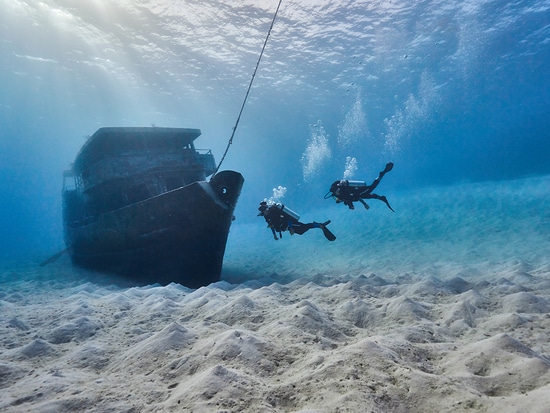
The colder temperatures cause the summer algae to die off completely. This results in jaw-dropping underwater visibility that often exceeds 200 feet. If you want to dive the famous shipwrecks, bundle up and book a winter trip.
Photo Courtesy Bermuda Tourism Authority
What Surprised Me About Bermuda's Oceans
The biggest shock for most first-time visitors is the dramatic shift in visibility. I have stood waist-deep at Warwick Long Bay in August and seen a slight haze in the water, only to return in February and see perfectly clear to the ocean floor.
Another major surprise is the buoyancy. The North Atlantic has a very high salinity level. You will find that floating on your back takes almost zero effort compared to swimming in freshwater or even other ocean destinations.
Practical Details: The Wetsuit and Gear Guide
Water temperature dictates your packing list. If you bring the wrong gear, your snorkeling trip will be miserable.
June to October: You only need a standard swimsuit. Consider a long-sleeve UV rash guard to protect against the intense summer sun.
May and November: Bring a 2mm to 3mm shorty wetsuit. This will keep your core warm if you plan to snorkel for more than twenty minutes.
December to April: You absolutely need a 5mm full wetsuit. If you are doing deep wreck dives, add a hood and booties to retain body heat.
Pro-Tip: Renting Gear on the Ground
If you do not want to pack heavy neoprene, local dive shops in Sandys Parish and St. George's rent high-quality wetsuits. Just call ahead to reserve your size, as inventory runs low during the busy shoulder seasons.
Common Mistakes
The most common mistake is assuming Bermuda is a Caribbean island. It is situated roughly 600 miles off the coast of North Carolina. If you book a January vacation expecting 80 F ocean water, you will be deeply disappointed.
Another mistake is ignoring the Gulf Stream. This massive warm water current brushes past the island. Depending on the daily tides and wind direction, beaches on the South Shore can feel noticeably warmer than the sheltered coves on the North Shore.
Finally, visitors often forget reef-safe sunscreen. The summer water feels so comfortable that you will lose track of time. Bring a physical mineral sunscreen, and remember that many beachside chair vendors only accept cash.
Alternatives: If the Water Is Too Cold for You
Sometimes you arrive in March, touch the water, and immediately change your mind. That is perfectly fine. You do not have to freeze to enjoy the local marine environment.
You can explore the underground Crystal Caves, where you walk over pontoon bridges spanning deep, clear subterranean pools. Just watch out for the slippery steps near the entrance.
Alternatively, visit the
Bermuda Aquarium, Museum and Zoo (BAMZ) in Flatts Village to see the marine life without getting wet. If you want to relax, book a hydrotherapy session at the Natura Spa inside Grotto Bay Beach Resort, where treatments take place in a private, natural cave.
Related Articles