We earn a commission from third-party booking links, at no extra cost to you
Sailing to Bermuda by Boat: What I Tell First Time Skippers
If you have ever stood on a dock in Newport, Annapolis, or Hampton and watched a 40 foot sloop slip her lines bound for Bermuda, you already know why people do this.
The island sits in open Atlantic with nothing between her and the US East Coast except the Gulf Stream, a few hundred miles of blue water, and whatever weather the Azores High decides to send you. It is the closest blue water passage most American sailors will ever make, and it is also the one that catches more crews out than they expect.
I am not a Bermudian. I write this site as a Certified Bermuda Specialist with the Bermuda Tourism Authority, and the notes below come from local contacts at the marinas, conversations with skippers who have done the run, and the questions readers have sent me since I started covering the island in 2008.
If you are planning to sail to Bermuda, or you are weighing whether the trip is realistic for your boat and crew, this is what you need to know.
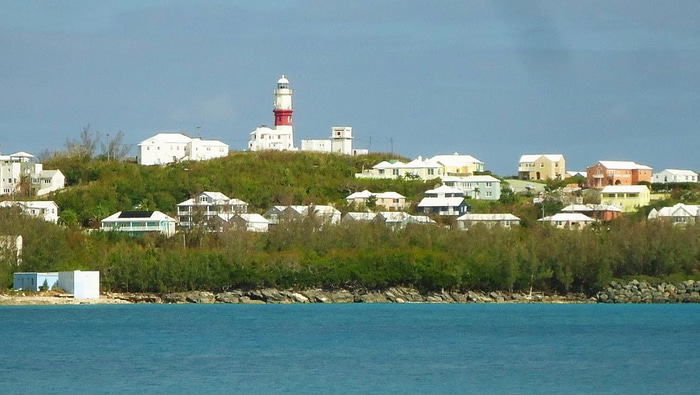
Approaching Bermuda from the North Atlantic
How Long Does It Take to Sail to Bermuda?
The honest answer is: it depends on the boat, the crew, and the Gulf Stream. From the US East Coast, you are looking at roughly 5 to 7 days for a typical cruising yacht in the 35 to 45 foot range. A well prepared 30 footer can do it in about 5 and a half days from New York in fair conditions.
The current race record from Newport, set by the MOD70 trimaran Argo in 2022, is 33 hours and 9 minutes, but that is a different planet from cruising.
Here is what most cruisers actually see:
Newport, RI to Bermuda (635 nautical miles): 4 to 6 days
New York to Bermuda (about 690 nm): 5 to 7 days
Norfolk, VA to Bermuda (about 750 nm): 5 to 7 days
Charleston, SC to Bermuda (about 800 nm): 6 to 8 days
Annapolis, MD to Bermuda (about 850 nm including Chesapeake): 6 to 9 days
Add a day or two for slower boats, contrary winds, or a Gulf Stream crossing you have to wait out. Subtract if the wind cooperates and you are running deep on a Bermuda High.
Pro-Tip: Plan provisions and water for double the expected passage length, and then add a few more days on top. I have heard from crews who left Norfolk expecting a five day trip and arrived on day nine after sitting out weather. The food and water math should never be tight.
Best Time to Sail to Bermuda
The traditional weather window is late May through mid June for the southbound trip, and late October through November for the return from the Caribbean. This is why the Newport Bermuda Race runs in June and the cruising rallies head south from Bermuda in the first week of November.
Avoid the heart of Bermuda's hurricane season. It officially runs from June 1 to November 30, but the highest frequency of hurricane activity in this part of the Atlantic is September. Storms generally form in the southeastern North Atlantic, move west toward the Caribbean and US southeast coast, then curve northeast. Bermuda often sits in that curve.
Outside hurricane season the dominant feature is the Bermuda Azores High, a summer high pressure cell sitting roughly between Bermuda and the Azores. When it parks itself in the right spot, you get steady 10 to 15 knot easterlies and a comfortable reach. When it slides west, you can end up motorsailing through a parking lot.
Bermuda's Weather is subtropical. February averages around 62 degrees F, August around 82 degrees F. Rain comes in short bursts year round, totalling about 58 inches annually. On passage, listen to VHF Weather Channel 2 (WX 02) at 162.4 MHz for continuous wind speed and wave height updates.
Pro-Tip: Build at least a four day weather window before you cast off, with a second qualified router checking your routing against the Gulf Stream eddies. Chris Parker and Commanders' Weather are the names most Bermuda bound skippers I know rely on.
The Gulf Stream: The Stretch That Matters Most
You cannot avoid the Gulf Stream on the way to Bermuda from the US. It is 40 to 60 miles wide, about a mile deep, and the current can run 4 to 5 knots northeast, which is exactly the direction you do not want it pushing you. Water temperature jumps by as much as 20 degrees within a single mile as you enter.
The Stream is also where the worst weather lives. Wind opposing current builds short, steep, ugly seas very quickly. Pick your crossing point using a current SST chart and a forecast that gives you at least 36 hours of steady wind direction. Cross at right angles if you can. This is not a place to be patient with your sail plan.
You may see
Portuguese man o' war drifting past on the way through, with their purple bladders and long stinging tentacles. They are common in this stretch of the Atlantic. Do not jump in to cool off, however inviting that warm water looks.
If You Don't Own a Yacht: Other Ways to Sail to Bermuda
This is the question I get most often. You do not need to own a boat to make the passage.
Race as crew. The Newport Bermuda Race takes place in partnership between the Cruising Club of America and the Royal Bermuda Yacht Club. About 155 boats run the 635 nautical mile course from Fort Adams in Newport to the finish line off St. David's Lighthouse. Boats are often looking for one or two additional offshore qualified crew in the months leading up to the start.
Sail Racing Academy and a few delivery skippers also run paid crew berths. The Marion Bermuda Race, friendlier and cruiser oriented, runs in alternate (odd) years from Marion, Massachusetts.
Join a cruising rally. The Salty Dawg Sailing Association and the ARC USA / Caribbean rallies use Bermuda as a turnaround or stopover, and they sometimes match owners with extra crew who want offshore miles.
Pay for a delivery berth. Several professional skippers run delivery slots for sailors building offshore experience. Expect to pay around $1,500 to $3,000 for the passage plus food contribution.
Hire a fully crewed charter. A handful of operators offer one way passages on larger yachts where you are essentially a passenger with a sail handling option. This is the most expensive route but requires no prior offshore experience.
Pro-Tip: If this is your first ocean passage, the Newport Bermuda Race is not the easiest entry point. The Marion Bermuda Race or a Salty Dawg rally crewing slot is usually a better first time experience. You will sail with people who actually want a teaching attitude rather than a podium.
Preparing Your Yacht and Crew
For your own boat, talk to your local Coast Guard office well before departure. Equipment lists vary by vessel size and flag. The baseline most experienced Bermuda passage skippers carry includes:
A 406 MHz EPIRB registered to the vessel, stored where it is accessible and survivable
A VHF radio with 25 watt output and a second handheld
An SSB or satellite phone (Iridium GO and Starlink Mini have changed this conversation a lot in the past two years)
A life raft sized for the full crew, with a survival bag of pre packed rations
Radar reflector, parachute flares, smoke flares, dye markers
Sea anchor (a 12 foot parachute on a 300 foot rode that you stream from the bow to hold you head to wind in heavy weather)
Foul weather gear, Type I offshore life jackets, harnesses with jacklines rigged, strobes, whistles, handheld compass
Boats under 30 feet are noticeably more vulnerable to North Atlantic conditions, and the ride is harder on the crew. A 35 foot or larger boat with four or five qualified crew is the comfortable minimum I would recommend if you are asking me.
Have at least one crew member who can shoot a sextant. GPS works, but in a marine environment with salt, vibration, and the possibility of a lightning strike, electronic navigation is not something I would bet a passage on alone.
Pro-Tip: Run a 24 hour shakedown sail with full offshore conditions before you commit. Watches, cooking underway, reefing in the dark, MOB drill. A passage to Bermuda is not the time to learn that your number two reef line chafes through in six hours.
Provisioning: Food and Water
Carry food for roughly double the expected passage length, plus a buffer. For a New York to Bermuda run you would normally plan for about 14 days of meals on what is typically a five to six day trip. Bad weather can stretch a passage, and a layday at Five Fathom Hole waiting for daylight is normal.
Top up your water tanks. A watermaker that runs reverse osmosis is gold on a Bermuda passage, but it draws real power, so size your batteries and charging accordingly. Carry a solar shower bag for warm water washes off the stern. In tropical humidity, cotton stays wet, so pack synthetic underlayers and quick dry shirts.
If anyone in the crew is prone to seasickness, do not let them go hungry. A cracker first thing in the morning before they get out of the bunk is the oldest trick in the book and it still works. Stugeron or scopolamine patches handle the worse cases, but talk to your doctor first.
What the Passage Actually Feels Like
You will see flying fish on the foredeck most mornings. You will see dolphins. If you are lucky, you will see whales between New York and the Stream. At night the bioluminescence in your wake is one of those things that makes the whole passage worth it.
You will also have at least one watch where the wind is forward of the beam, the autopilot is fighting the helm, water is coming over the dodger every fifteen seconds, and the kettle has slid across the galley for the third time. That part is normal. The Atlantic is not the Caribbean.
The northeasterly trade flow that runs along the US East Coast continues into Bermuda waters. In summer when the Bermuda Azores High is established, winds average about 15 knots. Sea state in the North Atlantic in a settled pattern is 3 to 4 feet, but swells from a distant low can run much larger.
Approaching Bermuda
If you are coming in at night with a clear sky, the first thing you will notice is a faint glow on the horizon when you are still about 40 miles out. Those are the lights of the island reflecting off the cloud base. By day, the first signs are usually the white tailed tropicbirds, the Bermuda Longtails, wheeling above the water. You will pass Fort Victoria on its hilltop in St. George's Parish before you raise the harbor.
Once you are within 30 to 40 miles, call the
Bermuda Maritime Operations Center (the old Bermuda Harbor Radio) on VHF Channel 16 or 27, or on 2182 kHz / 4125 kHz, or telephone 441-297-1010. They will guide you in, assign a customs officer, and confirm your berthing.
Bermuda's reefs extend up to about 10 miles off the northern shoreline, the side that faces the US. The 100 fathom line lies only 1 to 1.5 miles off the actual coast. Approaching from the north or northwest, stay well to the east. If you are unsure of your position, run east, pass St. George's at a safe distance, and come back in from the southeast. That is the conservative route every delivery captain I know uses.
Town Cut is the narrow channel into St. George's Harbor. When a cruise ship is transiting it, there is no room for anything else, so listen on VHF 16 before you commit. The channels are well marked with red and green buoys that flash at night.
If you arrive in the dark and you are not 100 percent sure of your landfall, anchor offshore at Five Fathom Hole (32 degrees 23' N, 64 degrees 37' W) and wait for daylight. Tell the Maritime Operations Center where you are.
Pro-Tip: Use
St. David's Lighthouse as your bearing on the approach. The reef field north of the island is no place to be at night with a tired crew. Five Fathom Hole exists for exactly this reason and there is no shame in using it.
Customs Clearance at Ordnance Island
Before you arrive, complete the
Bermuda Mariner's Travel Authorization online (within one day of scheduled arrival) and file your customs paperwork through SailClear. Every crew member also needs a valid machine readable passport. See
Bermuda travel documents for what to carry.
On arrival you proceed directly to the Customs Dock at the eastern end of Ordnance Island in St. George's Harbor with your yellow quarantine flag flying. The boarding officer handles Customs, Immigration, and Health clearance together and will collect a passenger arrival tax of $35 per person.
If you arrive between midnight and 8 am, you anchor at the quarantine area at Powder Hole on the southeast side of the harbor and report to the customs dock at 8 am. The Maritime Operations Center will direct you.
The standard visitor stay is 180 days (extended from 90 in August 2020). For longer stays you apply to the Department of Immigration. Permission for the boat to remain longer is handled separately by Customs.
Two firm rules that catch first timers out: no firearms or ammunition of any kind, including flare pistols, may be brought ashore (declare signal guns to the customs officer immediately on arrival), and spear fishing within one mile of Bermuda's shore is prohibited.
Yachts berthed at Ordnance Island, St. George.
Photo: Seán Pòl Ó Creachmhaoil, cc-by-sa 4.0
Where to Berth in Bermuda
St. George's Harbor is your point of entry, and the Market Wharf area and the north side of Ordnance Island offer limited first come first served berthing for visiting yachts on time limits. Penno's Wharf (the cruise ship dock) and the south side of Ordnance Island (the customs dock) are not available for general berthing.
Beyond St. George's, most cruisers move on to Hamilton Harbor or to one of the private marinas around the island.
The Royal Bermuda Yacht Club in Hamilton,
Hamilton Princess Marina,
Caroline Bay Marina in Sandys Parish, and the smaller club facilities all take visiting yachts. For the full breakdown of facilities, contacts, current rates, and which marina suits your draft and length, see my
Bermuda Marinas guide.
Pro-Tip: If you plan to leave the boat in Bermuda for hurricane season or longer, contact Bermuda Yacht Services in St. George well in advance. They act as port agent, handle paperwork, and know every reliable boatyard on the island. They are the first call I always tell readers to make.
After You Arrive: A Few Local Notes
Once you have cleared in, walk into the
Town of St. George, a UNESCO World Heritage Site about five minutes from the marina, and sit down for a bowl of Bermuda fish chowder spiked with black rum and sherry peppers. It is the dish that tells you, you have actually arrived. Cassava pie, traditionally a Christmas dish, shows up on a few menus year round if you ask.
For getting around the island on a layover, you cannot rent a car. Visitors use the pink and blue public buses (the island is divided into 14 fare zones), the ferry network out of Hamilton, scooters from the local rental fleets, or the small electric Twizy two seaters that have become a popular alternative. Most cruisers I know use the bus and ferry combination and rent a Twizy for a day to see the south shore beaches.
Now go get the boat ready. The Stream is waiting.
About the Author
 By Raj Bhattacharya
Raj has been writing about Bermuda since 2008, when he launched bermuda-attractions.com, one of the longest-standing independent guides to the island. A Certified Bermuda Specialist (Bermuda Tourism Authority), his work draws on personal visits, local contacts in Bermuda, and questions and trip reports from thousands of readers over the years.
Learn more about Raj Bhattacharya
Related Articles
1) Check out
Boatyards in Bermuda to get information about repairing and maintenance services available in the island, as well as haulage, slipping and bunkering facilities.
2) Check out
Bermuda Guide for lot more information about Bermuda.
|
Visitors' Reviews and Comments
Review and share your experience.
|