We earn a commission from third-party booking links, at no extra cost to you
Bermuda Cliff Jumping: Best Spots, Exact Heights and Safety Rules
Updated: October 2026
I have watched countless visitors stand at the edge of a Bermuda limestone cliff, stare down into the electric blue water, and freeze.
Cliff jumping here is a massive adrenaline rush, but it requires serious respect for the ocean. The coastal limestone is jagged, the tides change rapidly, and the water clarity can play dangerous tricks on your depth perception.
If you are ready to take the plunge, you need to know exactly where to go and what heights you are dealing with. This guide breaks down the safest jumping locations, the exact ledge heights, and the local rules you must follow to avoid injury.
At a Glance
| Feature |
Details |
| Best Time to Go |
May through October (warmest water, calmest seas) |
| Top Location |
Admiralty House Park (Clarence Cove) |
| Essential Gear |
Hard-soled water shoes, reef-safe sunscreen, GoPro |
| Primary Transport |
micro car rental, scooter, or public bus (Route 4) |
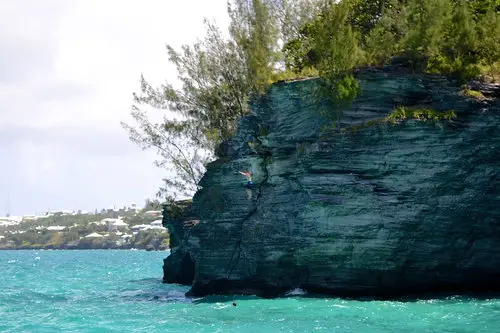
Photo: nathanmac87, flickr, cc by 2.0
What Surprises Visitors the Most
Bermuda's crystal-clear water severely distorts depth perception. When you look down from a 20-foot cliff, 15 feet of water can easily look like 3 feet of water. You will clearly see the sand and rocks on the bottom.
This optical illusion makes the physical depth-check terrifying, but it is absolutely mandatory. You will also be surprised by the local kids, who routinely execute flawless backflips off the highest points with zero hesitation.
Who This Is For and Who Should Skip
Cliff jumping in Bermuda is strictly for thrill-seekers, active adults, and incredibly strong swimmers. The ocean currents can pull, and you will often need to tread water while waiting your turn to climb back up the rocks.
You should absolutely skip this activity if you are a weak swimmer, traveling with toddlers, or visiting during the winter months. Between November and March, the Atlantic water is cold and the swells are dangerously rough against the rocks.
Admiralty House Park: Bermuda's Cliff Jumping Capital
If you want the best jumping experience, head straight to
Admiralty House Park in Pembroke Parish. This is the undisputed hub for local jumpers and tourists alike. The action is centered around Clarence Cove, a sheltered inlet with deep water and natural limestone platforms.
Jump Heights at Clarence Cove
Visitors constantly ask about the exact cliff jumping heights at Admiralty House. The beauty of
Clarence Cove is that it offers a tiered system for different bravery levels.
The lowest ledges near the water are a beginner-friendly 10 feet. The most famous jump point, a natural rock arch known locally as the Canon, drops you roughly 20 feet into the water. For the truly fearless, the highest accessible ledges near the top of the cliffs push 30 feet.
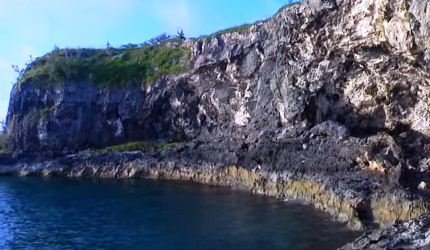
Canon, Admiralty House Park
Pro-Tip: The steps carved into the limestone to climb back out of the water are coated in a thin layer of algae. They are incredibly slippery, so take your time and maintain three points of contact when climbing.
The Cave Swim-Through and Naming Confusion
One of the best parts about jumping at Clarence Cove is the exit route. After you hit the water, you can swim directly into a dark, man-made tunnel carved into the cliffside by the British military. You swim through the cave and climb out via an interior staircase.
Do not confuse this location with the wild cave system in Hamilton Parish. If you are looking for underground stalactites, you need to read the guide on the
actual Admiral's Cave. The caves at Admiralty House Park are purely military tunnels meant for exploring and swimming.
Other Top Cliff Jumping Spots in Bermuda
If you want to venture beyond Pembroke Parish, you have a few other excellent options.
Diving Board Island (Offshore)
This is a modern favorite that you cannot reach from the shore. Diving Board Island is a tiny, rocky outcrop located offshore located at Great Sound in Warwick Parish.
The best way to jump here is by booking a jet ski tour with a local outfitter like KS Watersports. The guides will anchor the skis, check the water depth for you, and point out the safest 15 - 20 foot ledges to jump from.
Blue Hole (Walsingham Nature Reserve)
For a jungle vibe, head to
Blue Hole Park within the Walsingham Nature Reserve. Instead of the open ocean, you are jumping into a deep, brackish water mangrove pond. The jumps here range from 10 to 15 feet. The water is heavily shaded by trees, so it feels much colder than the ocean.
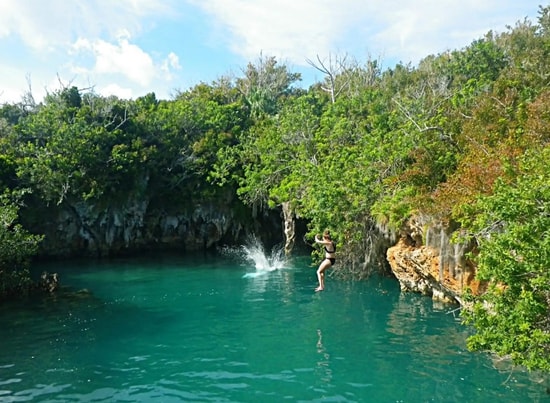
Blue Hole at Tome Moore's Jungle
Photo: Hidden Jems Bermuda
Horseshoe Bay (The Crown and Launching Pad)
Horseshoe Bay in Southampton Parish is famous for pink sand, but the large rock formations on the beach offer 30-foot jump. Locals call the safe spot
The Crown.
From the parking lot, walk down the pathway towards the beach, go past the cafe, further ahead and on your right you will see a hill. Climb the hill and midway go right. At the end you can take the plunge. You should try this jump only in high tide. At low tide, the depth of water is about 6-ft which is unsafe.
You must strictly avoid the flat rock formation known as Peel Rock located near the eastern end of Horseshoe Beach (i.e. left as you face the water). The water beneath Peel Rock is deceptively shallow, and severe casualties have occurred here.
Even at high tide, the water depth is only about 6-ft and it's highly likely that you will end up hitting the bottom. Never assume the water is deep enough just because it looks blue.
But another spot known as Launching Pad located across the Peel Rock is safe. The water is quite deep here but you should do it in high tide only.
Bridge Jumps (Watford Bridge and Flatts Bridge)
Bridge jumping is a local teenage rite of passage. The water below
Watford Bridge in Sandys Parish is quite deep and the jump is about 20ft. However, before jumping check both sides to ensure that there is no boat passing.
Flatts Bridge near the Bermuda Aquarium, Museum and Zoo offer drops of around 12 feet. Flatts Bridge has an extremely strong tidal current, so you must time your jump right at the slack tide.
Common Mistakes and Crucial Safety Rules
Do not let a vacation high override your common sense. The local hospital sees too many avoidable injuries every summer.
Ignoring the Tide: You must only jump at high tide. Jumping at low tide exposes underwater boulders and drastically reduces your safe landing zone.
Jumping Head-First: Never dive. Always enter the water feet first like a pencil. The ocean floor is uneven and unpredictable.
Going Barefoot: Bermuda's coastal limestone is razor-sharp. It will easily slice the soles of your feet open. Wear hard-soled water shoes or old sneakers you do not mind ruining.
Practical Details for Your Jump Day
Plan your jumping excursion for mid-day when the sun is directly overhead. This provides the best underwater visibility, allowing you to easily spot submerged rocks and dark reef patches.
Pack a thick towel, plenty of drinking water, and your water shoes. There are rarely vendors selling drinks directly at these cliff spots, so bring what you need.
Before you leave your hotel, ask the front desk to check the local Bermuda tide charts so you arrive precisely at peak high tide.
Alternatives: If Cliff Jumping Isn't For You
If you hike up to the edge and decide the drop is too much, do not stress. You can easily walk down to the small beach at
Clarence Cove and snorkel the perimeter of the rocks.
You can also explore the dry military caves on foot at
Admiralty House, or simply find a flat piece of rock to sit on and watch the locals put on an acrobatic show.
About the Author
 By Raj Bhattacharya
Raj has been writing about Bermuda since 2008, when he launched bermuda-attractions.com, one of the longest-standing independent guides to the island. A Certified Bermuda Specialist (Bermuda Tourism Authority), his work draws on personal visits, local contacts in Bermuda, and questions and trip reports from thousands of readers over the years.
Learn more about Raj Bhattacharya
Related Articles
|
Visitors' Reviews and Comments
Review and share your experience.
|