We earn a commission from third-party booking links, at no extra cost to you
Bermuda Water Sports 2026: Activities, Operators and Tips
With pink-tinted beaches, sheltered coves, a sub-tropical climate and one of the highest concentrations of shipwrecks per square mile anywhere in the Atlantic, Bermuda was built for water sports. Over the years I have watched the island's watersports scene shift, grow and lose a few familiar names along the way.
Presently, the menu is broader than it has ever been, with newer activities like e-foiling sitting alongside long-standing favorites such as helmet diving and reef snorkeling.
This page pulls together what you can actually do on and in the water in Bermuda this season, where to do it, who runs it, and the practical details that I think matter the most before you book. For deeper, activity-specific information, I have linked through to the dedicated sub-guides where appropriate.
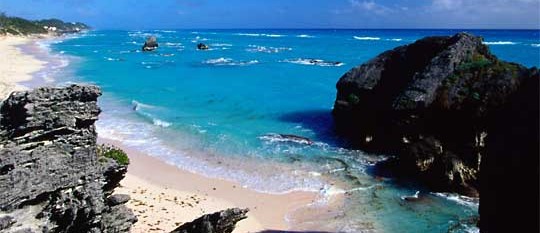
South Shore Beach and Reefs in Bermuda
Best Season and Water Conditions
The water is warm and comfortable from late May through October. Sea temperatures climb from the low 70s F in May into the low 80s F by July and August, and stay swim-friendly into October. By tradition, locals take their first dip of the year on Bermuda Day, May 24, which marks the official start of summer on the island.
You can still swim in winter, especially with a shorty wetsuit, but January and February water hovers in the mid-60s F. Many watersports operators close from January through March and ramp back up in April. If your trip falls outside the May to October window, expect a shorter list of activities and shorter daily hours.
Pro Tip
Hurricane season runs June through November, with most named-storm activity in August and September. Watersports tours cancel for safety even when the storm is days away. Build at least one buffer day into your itinerary if you are visiting in late summer.
Swimming and Snorkeling
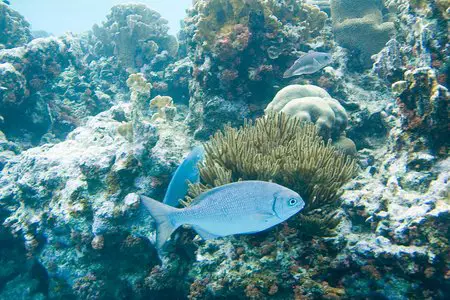
For shore snorkeling and easy swimming, my go-to beaches are Tobacco Bay in St. George's, Shelly Bay in Hamilton Parish (a long, shallow flat that is ideal with kids), Jobson's Cove in Warwick, Snorkel Park Beach at the Royal Naval Dockyard, and Church Bay in Southampton, which I rate as the best beachside snorkel spot on the South Shore for fish life and coral heads close in.
Horseshoe Bay, Elbow Beach and John Smith's Bay are the classic swim beaches; Horseshoe gets busy on cruise days, so I would go early.
Photo: Paul Asman and Jill Lenoble, cc by 2.0
For the truly spectacular reef and wreck snorkeling, you need to go offshore by boat. Boats run from the Dockyard area and from St. George's, taking you to mid-ocean reef sites and wreck sites you simply cannot reach from shore.
For details on tours, the best reef and wreck spots and how to choose between them, see my full guide on
Snorkeling in Bermuda.
Private Charters and Custom Snorkel Trips
One change I have tracked in recent seasons is the rise of private boat charters and customized snorkel excursions, particularly around the western end, Castle Harbour and the North Rock area. These are typically four to six hour outings on a small private boat, often with a couple of stops at reef sites and one at a shallow wreck.
They cost more per person than a scheduled group tour, but for families, anniversary trips or anyone who wants flexibility on timing and stops, they are worth pricing out.
Kayaking and Stand Up Paddleboarding
Kayaking is one of the most underrated ways to see Bermuda. From a kayak you can slip into coves that are unreachable by road, drift over shallow reefs, and explore islands in the Great Sound such as Paradise Lakes. Hungry Bay in Paget is a sheltered mangrove area that is excellent for a slow paddle.
Singles, doubles and family-sized sit-on-top kayaks are widely available. A handful of operators run LED-lit, clear-bottom kayak tours after sunset, where you watch fish and rays pass underneath the hull. It is gimmicky on paper and genuinely fun in practice.
Stand up paddleboarding has grown steadily and most operators offer it alongside kayaks. Guided eco-tours through sheltered inlets and mangroves, around Hungry Bay, the Walsingham Nature Reserve area near Tom Moore's Jungle, and the calm coves around Mangrove Bay, are now much more commonly marketed than they were a few years back.
These are a strong fit if you are not looking for a workout, you want a guide who can name what you are seeing, and you want to learn a bit about the island's flora at the same time.
Pro Tip
If you are at all unsure of your paddling stamina, take the guided tour rather than the rental. Bermuda's tides and afternoon trade winds can make the return leg deceptively hard, especially in the Great Sound.
Jet Skiing and Water Skiing (Guided Tours)
A point worth being absolutely clear on: jet skiing in Bermuda is only permitted through guided commercial excursions with approved operators. Independent rental and unguided operation by visitors are not allowed.
You ride your own machine, but you ride in a small group, behind a licensed guide, on a defined route. There is no Bermuda equivalent of the open-rental jet ski you find at most Caribbean resorts.
That said, the guided tours are excellent. The route typically takes you under the Somerset Bridge (the smallest working drawbridge in the world), over the partially submerged HMS Vixen wreck for hand-feeding fish, past longtail nesting cliffs, and around quiet inlets where green sea turtles feed.
Where it runs: Mostly the western end. The Dockyard area, Mangrove Bay in Sandys, and the Great Sound are the main launch zones.
Typical tour length: 75 minutes to two hours, including a safety briefing.
Group size: Usually capped at five or six jet skis per guide.
Skill level: No experience needed. No license required in Bermuda for guided jet ski tours.
Water skiing in Bermuda is best from May through September. The protected harbors do most of the work for you, with the Great Sound, Castle Harbour, Hamilton Harbour, Mangrove Bay, Ely's Harbour, Harrington Sound and the area off Spanish Point in Pembroke all suitable depending on conditions.
By law, you must be accompanied by a licensed skipper, so this is not a rent-and-go activity. Centers supply the boat, skis, wakeboards, knee boards and safety gear, and instructors handle absolute beginners through trick ski and slalom.
Operator availability shifts season to season, so I would confirm by phone or website rather than assume continuity from a previous trip.
Pro Tip
Booking from a cruise ship's onboard excursion desk is convenient but tends to cost more. If you can step off the ship and book at the operator's own dock or website, you will usually save 15 to 25 percent.
Helmet Diving in Bermuda
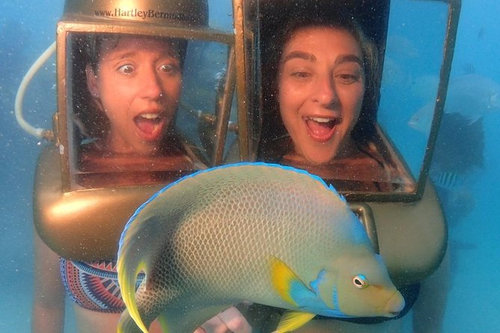
If you cannot swim, do not love snorkeling, or just want to walk on the seabed with your head dry, helmet diving is one of the most distinctive things you can do in Bermuda. You wear a glass-fronted helmet, breathe normally through a hose connected to a compressor on the boat, and walk along the ocean floor at about 10 to 12 feet of depth.
Photo: Harley's Undersea Walk
In a typical outing, the boat leaves the western end, you spend 25 to 40 minutes underwater in small groups, and the full excursion lasts around three to three and a half hours. Ages 8 to 85 are welcome, and the helmets sit on your shoulders rather than gripping your head, so even people who feel claustrophobic in masks usually do fine.
For real-experience accounts and a comparison of operators (which has thinned out over the years; Hartley's currently dominates the field), see my full page on
Helmet Dive in Bermuda.
Scuba Diving in Bermuda
Bermuda has roughly 230 square miles of coral reef around it and one of the densest concentrations of shipwrecks anywhere in the Atlantic. Wrecks span four centuries, from Spanish galleons to early 20th-century steamers and World War II era hulls. For divers, this is the single best argument for the island.
Reef dives are typically shallow (25 to 40 feet) with strong visibility, which makes Bermuda a friendly destination for newer certified divers and refresher courses. Wreck depths vary from very shallow snorkel-accessible sites (the HMS Vixen, the Vinland) to deeper technical sites that need full open-water certification.
Most dive centers offer reef and wreck dives, PADI certification courses, refresher dives, and resort dives for non-certified visitors. A few also offer Snuba, a halfway-point between snorkel and scuba where the tank stays on a floating raft. For dive sites, certification options and which centers I would compare, see my full guide on
Bermuda Scuba Diving.
Flyboarding in Bermuda
Flyboarding straps you to a board connected by a high-pressure hose to a personal watercraft, and the water jets lift you several feet above the surface. It looks alarming and it is mostly safe in trained hands. You get a 10-minute starter briefing on land, then you are in the water with an instructor who is controlling thrust while you focus on balance.
Flyboarding is available primarily during the peak summer cruise season from May through October. Lessons operate strictly by advance reservation and are highly subject to wind and water conditions inside the harbor.
Who Should Do It: Adventurous adults and teenagers with strong swimming skills, good core strength, and solid lower-body balance. It is highly intuitive for people with snowboarding or wakeboarding experience.
Who Should Not Do It: Individuals with chronic knee, ankle, or back problems due to the pressure of the boots and water resistance. It is strictly prohibited for pregnant women, people weighing under 45 kg (to ensure proper board weighting), or anyone with severe inner-ear issues that affect vertical balance.
Reservations can be made by inquiring directly at Calico Jack's in the Royal Naval Dockyard or by calling +1 (441) 504-7197.
Expect to pay between $150 USD and $180 USD for a standard 30-minute session. This base price incorporates a mandatory 10-minute on-land safety briefing, equipment orientation, your helmet and life jacket rentals, followed by roughly 20 minutes of guaranteed, throttle-controlled active flight time in the water.
E-Foiling in Bermuda
The bigger newer arrival is e-foiling, which is electric hydrofoil boarding. A battery-powered motor sits below the board, lifting you on a small underwater wing once you are above about eight miles per hour. The sensation is closer to silent flight than to surfing.
It is genuinely easier to learn than traditional foiling because you control thrust with a handheld remote rather than depending on wind or waves. Most beginners are riding within 30 to 60 minutes of their first lesson.
Operator Details: BDA Watersports, a premier island outfitter operating out of Somerset Bridge. The watersport is available daily during peak season (May to September) from 8:00 AM to 6:00 PM. Off-season sessions (October to April) are available strictly by reservation and are entirely weather-dependent.
Contact Information: Sessions can be booked online through the BDA Watersports E-Foil Portal, by calling +1 (441) 234-0914, or emailing
[email protected].
A standard 75-minute E-Foil Lesson costs $300 USD for a single person. The fee includes your private dedicated flight coach, a specialized Fliteboard setup, all necessary safety gear, and structured Bluetooth remote training.
Pro Tip
E-foiling and flyboarding both depend on calm water and clear weather. Book these for the start of your trip if you can. That way, if your booked day gets blown out by wind, you have a chance to reschedule before you fly out.
Parasailing
Parasailing is one of those activities where Bermuda is conspicuously different from the Caribbean. Operator presence has been limited and inconsistent, with availability varying by season. I now describe parasailing in Bermuda as seasonally available rather than consistently offered, and I would not promise it to anyone in your group without confirming a current booking first.
When it does run, it is typically a 10 to 12 minute flight over the western water area at heights of 400 to 600 feet, launched and recovered from a winch boat so you stay dry. Tandem and triple options are common. For the current operator picture and where flights are typically running from, see my page on
Parasailing in Bermuda.
Windsurfing and Kitesurfing
Bermuda has a small but committed windsurfing and kitesurfing community. The best spots are weather-dependent, with the Great Sound, Spanish Point and the open North Shore being the regular options. Equipment rental is far more limited than in the bigger watersports categories, and visiting riders tend to bring their own kit or rent through informal local contacts.
Bermuda does get some surf, especially through the late fall and winter when North Atlantic swells reach the South Shore. It is not a primary surfing destination by global standards, but locals do ride breaks at spots like Church Bay and Tobacco Bay.
See my guide on
Windsurfing and Kitesurfing to find out information about these thrilling sports including how to get rentals, the best beaches, best time etc.
Fishing in Bermuda
Shore fishing requires no permit. You can line-fish from rocky shores and footbridges alongside locals, with typical catches including pompano, bonefish and snapper.
Reef fishing and deep-sea fishing both require a fishing boat, and you are covered by the captain's license. Reef catches include Bermuda chub, snappers and groupers.
Deep-sea catches in season include yellowfin and blackfin tuna, wahoo, mahi-mahi and the occasional marlin in the warmer months. Most charters run from Sandys, Hamilton or St. George's.
Whale Watching in Bermuda
Migrating humpback whales pass Bermuda from late February through April, with peak sightings in March and early April. Boat tours leave from the Dockyard and from Hamilton on the best weather days, and you can sometimes spot whales from elevated South Shore lookouts. See
Whale Watching to know all about this increasingly popular activity in Bermuda.
Swimming with Dolphins
Year-round,
Dolphin Quest at the National Museum of Bermuda Complex in the Royal Naval Dockyard offers structured dolphin encounters, from short shallow-water meets to longer swim programs.
Where to Base Yourself for Easy Watersports Access
Royal Naval Dockyard area (Sandys): The single best base for cruise visitors and for anyone who wants the densest cluster of watersports operators within walking or short-taxi distance.
St. George's (East End): Smaller selection, but well placed for Tobacco Bay snorkeling, Castle Harbor excursions, and the eastern reef sites.
Hamilton Parish and Flatts: Central, good for kayaking around Harrington Sound and the Walsingham mangrove areas.
Southampton and Warwick: Closest to Church Bay, Horseshoe Bay and the South Shore beaches.
One detail to note: the number of dedicated watersports operators at the former Dockyard watersports hubs fluctuates from season to season, with some outfits relocating, consolidating or pausing operations. I would not assume that an operator I recommended on this site a couple of years back is still in the same spot today. Verify locations and offerings on the operator's own website or social channels before you arrive.
Getting to Watersports Launch Points
Bermuda's public bus and ferry network is run as Shorelink, and you can now buy bus and ferry tickets, tokens and multi-day passes digitally through the Shorelink app (Apple App Store and Google Play). For independent travelers, this removes the old hassle of finding exact change or waiting at a kiosk.
A 1-day transportation pass costs $19 adult, $9.50 child and covers unlimited buses and ferries.
A 3-day pass is $44 adult.
A 7-day pass is $62 adult.
Single ferry fares range from $3.50 to $5.00 adult depending on route.
The fast Blue Route ferry from Hamilton to Dockyard takes about 20 minutes and is much quicker than the equivalent bus. The seasonal Orange Route from Dockyard to St. George's runs roughly from late April through early November and is the simplest way to move between the two cruise-friendly ends of the island.
Pro Tip
The Shorelink app needs data connectivity to work. If you are arriving without an international data plan, pick up a local SIM at the airport or use eSIM before you land, otherwise plan on buying paper passes or tokens at the Hamilton Ferry Terminal, the Central Bus Terminal, or the Visitor Services Centres in Dockyard and St. George's.
Final Booking Tips
Reserve high-demand activities (helmet diving, jet ski tours, e-foiling, dolphin swims) a few weeks ahead in peak season. Watch the weather forecast in the two days before any activity that depends on calm conditions.
Tip your guides; Bermuda's watersports operators run small teams and 15 to 20 percent is appreciated. And when in doubt, ask the operator directly. The community is small, the staff usually know each other, and a quick honest question about conditions and suitability tends to get you a straighter answer than any third-party booking site.
About the Author
 By Raj Bhattacharya
Raj has been writing about Bermuda since 2008, when he launched bermuda-attractions.com, one of the longest-standing independent guides to the island. A Certified Bermuda Specialist (Bermuda Tourism Authority), his work draws on personal visits, local contacts in Bermuda, and questions and trip reports from thousands of readers over the years.
Learn more about Raj Bhattacharya
Related Articles
|
Visitors' Reviews and Comments
Maura (October 2019)
Hello, I haven't been to Bermuda since I was a teenager on a cruise with my parents ... (I won't elaborate as to how long ago that was!) Was hoping to book a 4 day vacation with my hubby around the 3rd week of May (May 16, 2020). We are beach/water people and love to be swimming, boating, anything related to being in and on the water. My husband thinks I'll be freezing because in all honestly I'm a warm weather gal and tend to be chilly below 70 degrees. Will we be able to thoroughly enjoy Bermuda beaches and water activities this time of year, or should we push off to another month? Thank you!
Raj (bermuda-attractions.com) October 2019
Hi, both air and water temperature steadily rises through May and in the second half of the month you can expect average sea temperature to be in low 70s. In fact, May 24th is celebrated traditionally as Bermuda day which is the day when the official summer season begins in the island. Although you can enjoy the beaches in May, June would be even better for all water activities when the average water temperature touches high 70s.
Jill Mooney (October 2014)
Hi my husband myself and 2 children aged 17 yrs and 14 yrs were looking to book to stay at the grotto beach resort for new year .just wondering will their be any attractions or watersports open to occupy 2 teens for a week also my teens love the water so will it be warm enough to go into the sea they normal in the water all the time back home in wales In wet suits as the water temp isn't that warm .
Raj (bermuda-attractions.com) October 2014
Hi, The on-site operator Blue Hole Watersports at Grotto Bay Beach Resort remains open until end-December. They are closed in Jan and Feb, and so are the most other watersports operators in Bermuda. The average water temperature in January is around 65 deg F, so unless one is used to it, a wetsuit will be required.
|